Solvent Recovery
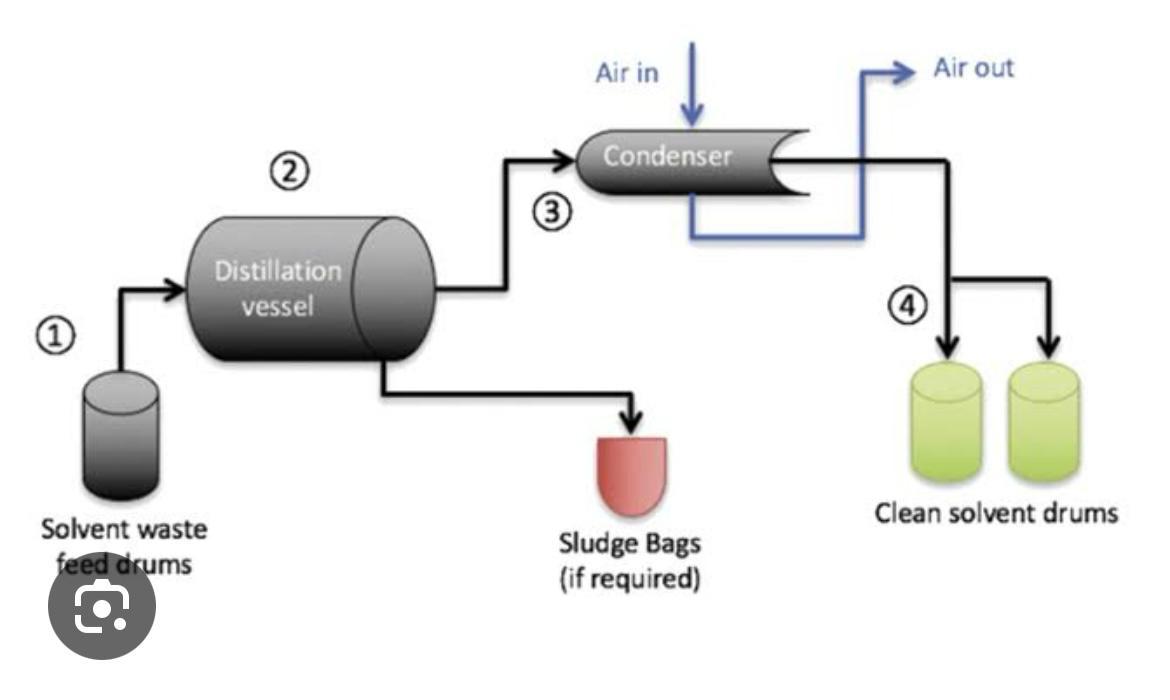
Solvent recovery process diagram
"Solvent recovery is a highly advantageous process in the realm of chemical manufacturing and waste management, focusing on the extraction of useful materials from waste or by-product solvents generated during various industrial operations. Manufacturers often utilize a range of organic solvents, which, when used in production, can become contaminated and require treatment for reusability or safe disposal.
The solvent recovery process typically employs several advanced techniques, including distillation, which involves heating the solvent mixture to separate components based on their boiling points. This method is widely used due to its efficiency and effectiveness in purifying solvents. Other sophisticated methods include adsorption, where contaminants adhere to the surface of solid adsorbents, and membrane filtration, which utilizes semi-permeable membranes to separate solvents from impurities.
By applying these processes, recovered solvents can be repurposed for reuse in manufacturing, significantly reducing the need for the production of virgin solvents. This shift not only conserves valuable natural resources but also mitigates the environmental footprint associated with solvent production, which often involves the extraction and processing of fossil fuels.
Moreover, solvent recovery plays a pivotal role in waste minimization. By recovering solvents, manufacturers can drastically reduce the volume of hazardous waste that needs to be treated or disposed of, thus aligning with stringent environmental regulations and sustainability goals. In addition, reintroducing recovered solvents into production can lead to substantial cost savings by lowering procurement expenses and reducing disposal fees. The practice contributes positively to the circular economy by fostering a system where materials are kept in use for as long as possible, thereby decreasing overall environmental degradation and promoting responsible chemical management.
Implementing an effective solvent recovery program can also enhance the reputation of a company in terms of corporate social responsibility, as stakeholders increasingly demand environmentally friendly and sustainable operational practices. By establishing a robust solvent recovery process, manufacturers not only comply with regulatory standards but also position themselves favorably in a market that values sustainability and resource efficiency